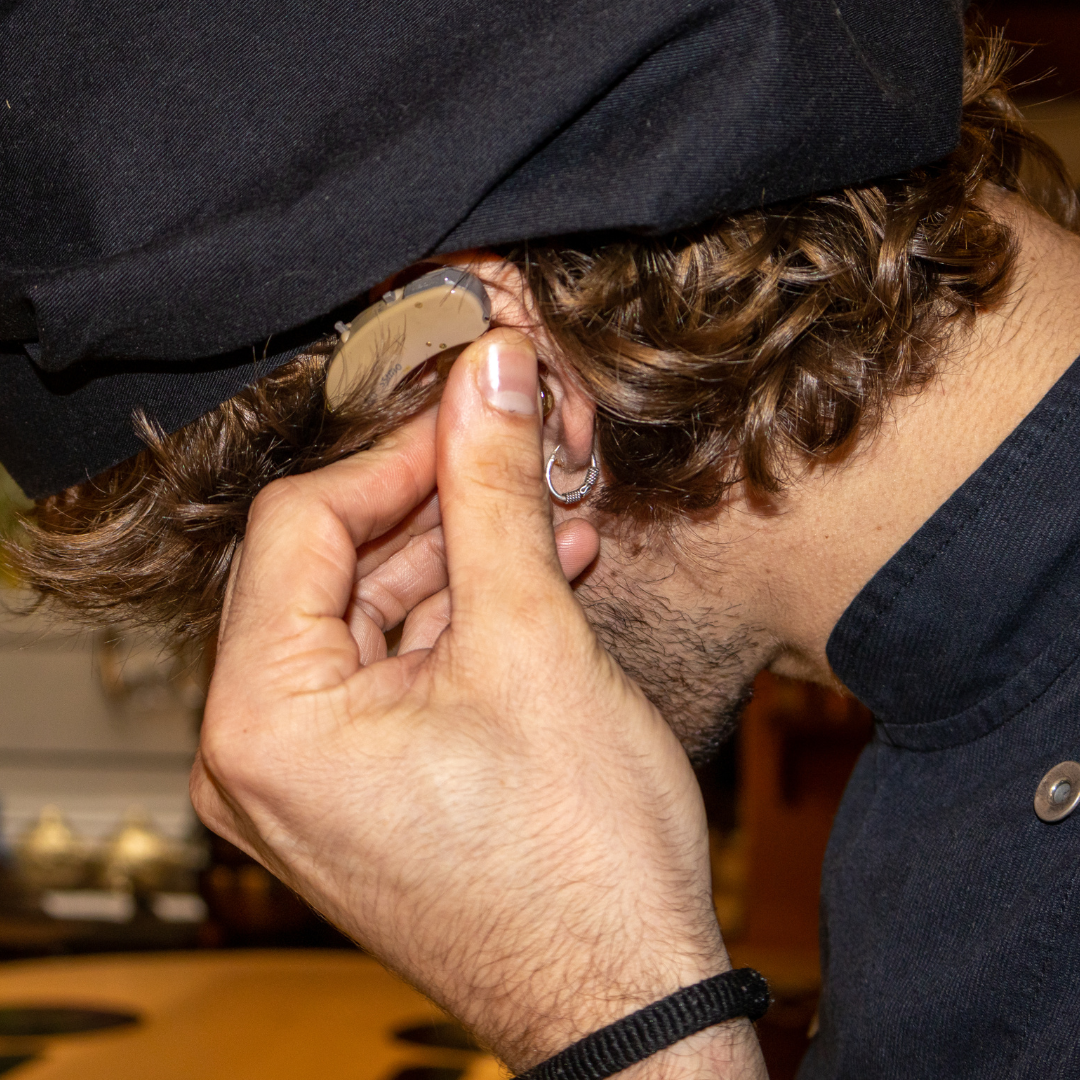
Group discussions in restaurants often become difficult to comprehend when room acoustics compete with your focus and hearing. We perform comprehensive diagnostic assessments to evaluate hearing in quiet rooms and challenging acoustic spaces to identify functional deficits. As soon as we identify the physiological cause of your difficult hearing, we deliver personalized rehabilitation options.
Explaining Normal Quiet Hearing Versus Restaurant Listening Fatigue
A tranquil environment produces a beneficial signal-to-noise ratio where spoken dialogue easily overpowers weak ambient noise. Restaurants create the opposite situation. Cross-talk, ambient music, dishware noise, and harsh acoustic reverberation interfere with speech clarity, forcing your brain to labor to extract the target voice.
These auditory struggles commonly accompany untreated high-frequency hearing loss, central processing delays, or presbycusis. Attention, fatigue, dim lighting, and distance from the speaker may make it worse. Many individuals register normal audiometric thresholds on standard pure-tone screenings yet show profound deficits during speech-in-noise testing. Inability to track speech in crowded restaurants merits audiological evaluation even when standard daily hearing sounds completely normal.
Diagnosing High-Frequency Hearing Loss and Clarity Issues
We begin by reviewing your history of communication difficulties, prior noise exposures, ringing or tinnitus, pharmaceuticals, and unilateral symptoms.
Pure-tone audiometric evaluations measure the absolute quietest sounds audible across specific octave frequencies using air and bone conduction. High-frequency hearing loss commonly presents on the audiogram as a characteristic precipitous drop in the higher frequency ranges. Comprehensive evaluations frequently include impedance tympanometry to examine middle-ear function and recorded word-recognition testing to measure speech understanding.
Standard quiet test booths fail to simulate real-world restaurant noise, making speech-in-noise testing a crucial clinical tool. It measures how well you recognize words or sentences as competing sounds become louder. Combined, these clinical findings determine whether your symptoms stem from acoustic audibility, word clarity, central noise filtering, or multifactorial causes.
The Role of Central Auditory Processing Disorders in Adults
A diagnosed auditory processing disorder affects how the brain’s auditory cortex analyzes, organizes, and interprets sound. While peripheral ears may register soft tones normally, the auditory cortex struggles to filter competing noise, resolve phonetic contrasts, or keep pace with rapid conversation. Our protocol begins by thoroughly testing peripheral hearing before determining if a specialized central auditory-processing battery or interdisciplinary referral is warranted.
Behavioral Strategies for Hearing Clearly in Loud Venues
Simple situational adjustments enhance the speech signal entering your ears and offer clearer facial cues. Prioritize dining at establishments designed with subdued acoustics or reserve tables during non-peak business hours. Restaurants featuring plush booths, wall acoustic panels, heavy drapery, carpeting, and sound-dampening materials provide superior listening compared to open rooms with reflective surfaces.
Practical seating strategies in the dining room:
- Ask for seating positioned far away from open kitchens, noisy bar areas, ceiling speakers, and large parties.
- Choose a seat with your back against a solid wall to block acoustic clutter originating from behind.
- Face your speaking partners directly in well-illuminated seating to maximize visual speech cues.
- Maintain the shortest comfortable physical distance between yourself and your conversation partner.
- Position your better-hearing ear directly toward your main conversational partner.
- Request that companions rephrase misunderstandings using different words rather than repeating the same sentence.
- Actively confirm key information rather than smiling and guessing at ambiguous dialogue.
- Take brief listening rests outside or in quiet hallways when mental fatigue emerges.
- Ask dinner guests to speak with clear enunciation at a steady, natural conversational rate.
- Elevated yelling distorts auditory signals and seldom improves actual phonetic comprehension.
Assistive Listening Technologies for Noisy Environments
Choosing the most effective auditory device requires evaluating diagnostic findings, acoustic lifestyle factors, and the presence of hearing loss. Customized hearing aids employ directional microphone beamforming, noise cancellation algorithms, and targeted dining programs to prioritize speakers in front while lowering ambient noise. They still require realistic expectations because no device can remove every unwanted voice.
A remote microphone can provide a stronger improvement in the signal-to-noise ratio. The microphone is placed near or worn by the speaker and sends that voice directly to compatible hearing aids or another receiver. This strategy bypasses the detrimental effects of room reverberation, distance, and localized background chatter.
Other useful options include:
- Wireless conference table microphones that capture multi-speaker discussions
- Integrated telecoil programs for tapping into venue-wide induction loop systems
- Smartphone live-captioning platforms providing instant speech-to-text visual support
- Over-the-counter hearables equipped with directional speech-enhancement algorithms
- Acoustic sound-meter apps and dining review directories that score restaurant noise
Our audiology staff helps you evaluate options, ensures wireless compatibility, and trains you on operating your chosen equipment.
How an Audiologist or Physician Can Improve Hearing in Noise
A comprehensive hearing evaluation looks far beyond the common misconception of “I hear fine in quiet environments.” We assess the specific acoustic settings, speaker dynamics, and volume levels that disrupt your hearing to administer targeted evaluations. Clinical evaluation commonly integrates pure-tone audiometric testing, middle-ear analysis, word recognition, and speech-in-noise measures. Advanced auditory-processing testing can be introduced whenever medical history and baseline assessments justify specialized evaluation.
Sudden unilateral hearing drops, acute asymmetric changes, or rapid auditory decline mandate evaluation by an ear, nose, and throat physician. Dedicated individualized care pinpoints the underlying auditory cause rather than dismissing your struggles as standard restaurant noise.
Schedule a Diagnostic Hearing Evaluation Right Away
If struggling through dinner conversation leaves you mentally exhausted, detached, or constantly guessing, schedule a complete hearing evaluation with our clinic. We can evaluate targeted solutions to optimize your hearing in noisy environments using prescription hearing aids, assistive listening technology, or communication strategies tailored to you.
Contact our practice today to book your consultation and take a decisive step toward reconnecting in social settings.