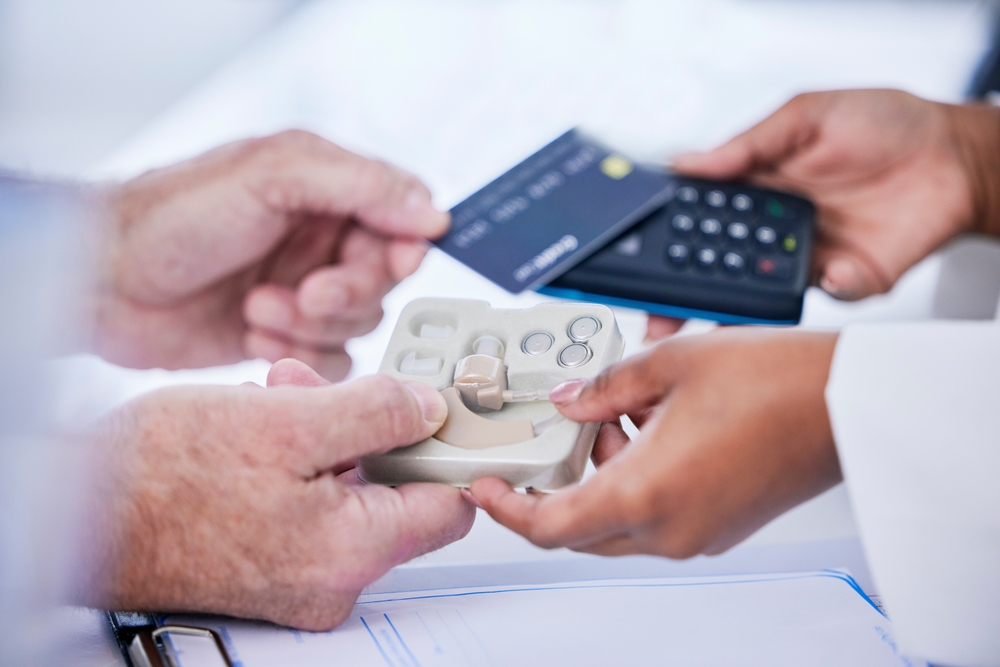
If you’ve looked into hearing aids, one of the first things you’ve probably noticed is the price. Based on the sophistication of the digital signal processing and the required audiometric programming, these devices span a wide pricing spectrum. For many people, that comes as a surprise, and it can understandably feel like a stopping point.
The cost is real, but it’s not the whole story. A high percentage of candidates remain unaware that retail pricing is seldom the final out-of-pocket obligation. Through the strategic use of indemnity policies, dedicated health accounts, and flexible payment timelines, the acquisition process becomes highly manageable.
This clinical brief outlines primary procurement strategies to educate you prior to your diagnostic evaluation, ensuring a confident approach to auditory rehabilitation.
Maximizing Private and Employer Insurance Benefits for Acoustic Devices
Before assuming you’ll be paying completely out of pocket, start with your insurance.
Commercial insurance programs exhibit a broad diversity in how they classify and fund auditory medical equipment. A number of policies indemnify a fraction of the cost, contrasted with plans that provide a capped benefit cap. In contrast, certain insurance products offer zero provision for auditory assistive devices. To clarify your position, review your summary of benefits or contact the carrier regarding otolaryngological provisions. Inquire specifically about monetary caps, whether real-ear measurements and fittings are covered, and your preferred provider network status.
When navigating public health options, recognize that traditional federal Medicare components do not subsidize these devices. However, many Medicare Advantage (Part C) plans do include hearing benefits, usually as a set yearly allowance.
For those on Medicaid, coverage depends on where you live. Certain jurisdictions offer full or partial device funding for qualified applicants, which your clinic can help verify.
Tax-Advantaged Financing: Utilizing HSA and FSA Funds for Hearing Care
Possessing an HSA or an FSA equips the patient with a highly efficient asset for absorbing device costs.
These clinical instruments meet the legal definitions for qualified medical expenses, authorizing the use of untaxed income. Utilizing this financial pathway yields substantial savings that alter the economic equation. As a case in point, combining a $2,000 equipment cost with a 22% tax bracket yields a net savings of several hundred dollars. HSAs roll over year to year, while FSAs usually expire at the end of the year. That means it’s especially important to use those funds before they’re lost! Both custom-programmed medical devices and eligible over-the-counter options are valid selections, making a baseline balance check highly prudent.
Structured Payment Plans and Credit Options for Modern Hearing Aids
Most established audiology centers provide entry points to dedicated consumer medical credit lines, eliminating the need for total upfront liquidation. These specific arrangements, often administered via platforms such as CareCredit, frequently feature promotional interest-free windows. That means you don’t have to choose a lower-quality device just to keep costs down in the short term.
Financing is a normal part of the conversation. Patients experiencing financial hesitation should openly review these parameters during their diagnostic evaluation. Recognize that these corporate and clinical credit options are deliberately positioned to bridge the affordability gap! And it because people shouldn’t have to put a huge strain on their finances just to be able to care for their health, including their hearing.
Navigating Veterans Administration (VA) Otology and Hearing Aid Benefits
Because acoustic injury is statistically ubiquitous among military personnel, the VA provides extensive audiology benefit frameworks.
Qualified service members are frequently entitled to premium, custom-fitted hearing systems at zero cost via VA medical channels. Regardless of whether your auditory deficit is directly tied to your service record, your general enrollment status can open these pathways. For those who have yet to leverage their military benefits, initiating a query with your regional VA medical center is strongly advised.
Alternative Community-Based Grant and Aid Programs for Hearing Hardware
Independent philanthropic organizations and civic associations offer specialized avenues to mitigate the expense of hearing devices. Distinguished institutions, including the Starkey Hearing Foundation alongside local Lions Clubs, manage device donation programs. Various regional government offices maintain independent funds to supply assistive devices to citizens meeting specific income criteria.
Although these civic grants frequently carry rigid income thresholds and waiting intervals, they are highly valuable when commercial insurance fails. You can check online with most of these organizations to see if you qualify, or at least get the conversation started.
OTC Hearing Aids: Are They a Cheaper Alternative?
Over-the-counter (OTC) hearing aids are a lower-cost option, typically ranging from $200 to $1,000 per pair. These non-prescription units are legally cleared to assist adult individuals exhibiting self-perceived mild-to-moderate situational hearing deficits.
Yet, without the intervention of an expert to customize the acoustic programming, many users fail to achieve adequate speech intelligibility. In cases of advanced sensory impairment, prescription hardware calibrated to a precise audiogram is mandatory for successful rehabilitation.
Prior to opting for a retail OTC device solely based on economic factors, a formal diagnostic audiogram is highly recommended. These consumer products can serve effectively as an interim bridge while a custom prescription build is manufactured or during a benefit review period. They’re better than nothing and offer a decent temporary fix, but they’re not ideal for the long term.
Developing Your Customized Financial Strategy for Better Hearing
We help our patients navigate hearing aid costs every day. Most individuals are pleasantly surprised by the diversity of available payment pathways once analyzed.
By providing your current insurance documentation at check-in, our specialists can cross-reference your network benefits and construct a tailored payment solution. Phone our office location today to secure a consultation slot or coordinate your evaluation via our website. We’re happy to help you find a solution for hearing aid costs that feels manageable.