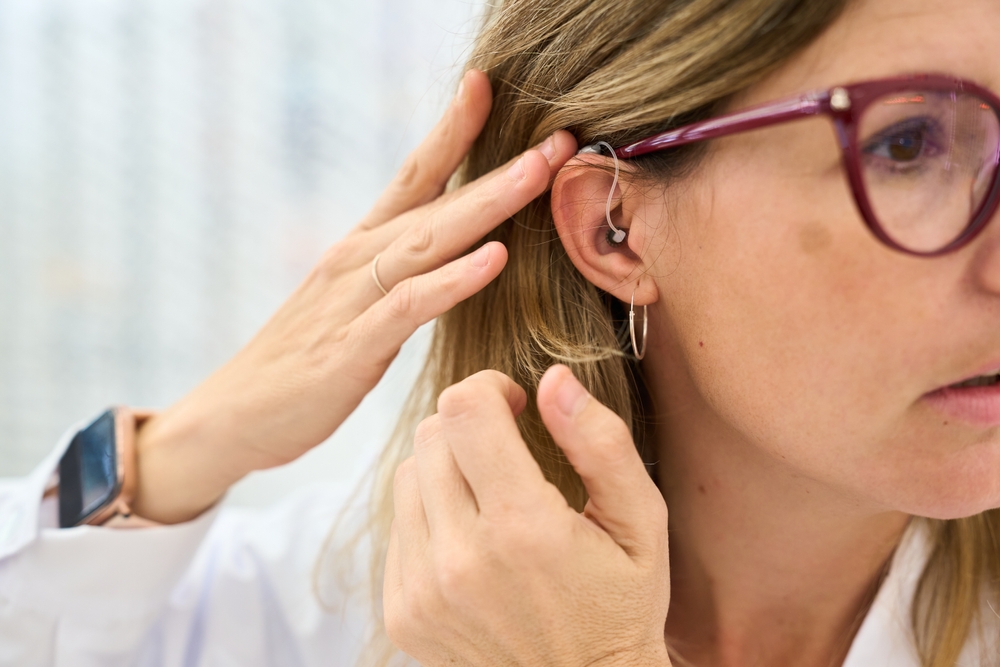
It is incredibly common for individuals to resist getting hearing instruments simply because they dread a bulky appearance or an uncomfortable fit. This hesitation is entirely valid given historical product designs! Furthermore, many individuals harbored deep anxieties about social isolation, fearing others would exclude them from discussions based on assumptions of cognitive decline or profound auditory deficits.
Because this archaic mental image endures, thousands remain deeply reluctant to schedule an initial audiometric evaluation. But the reality is that today’s modern hearing aids look and feel very different from what you might expect. Thanks to rapid technological evolution, modern devices are remarkably downsized, highly ergonomic, and exceptionally covert.
If you’ve been putting off treatment because of how hearing aids used to look, it might be time to take a fresh look at what’s available today!
Why the Bulky, Obvious Hearing Aid Is a Thing of the Past
If you close your eyes and picture a hearing aid, you might imagine something large, hooked over the ear, and visible from across the room. Should that be your current expectation, you are inadvertently recalling the clunky designs common to the 1980s and 1990s.
In the intervening decades, the entire field of otolaryngology and acoustic engineering has undergone a massive paradigm shift. Unprecedented breakthroughs in microchip architecture, material sciences, and digital signal processing have utterly revolutionized modern aesthetics. The resulting devices are beautifully downsized, highly aerodynamic, and built to match lifestyle needs by remaining completely hidden.
A multitude of current designs fit entirely inside the physical ear canal, ensuring they remain hidden from view during normal social encounters. Others rest behind the ear but are so compact and lightweight that they’re easy to overlook, especially when matched to your hair or skin tone.
Primary Hearing Aid Styles, From Invisible to Barely There
To understand how these sophisticated medical devices are physically configured, review this concise anatomical breakdown:
Deep Canal Solutions: Invisible-in-Canal (IIC)
This specific configuration offers the highest degree of user discretion. Engineered to rest deep inside the ear canal, IIC systems are individually molded to match the precise contours of your ear. Spoken interactions at arm’s length occur without anyone realizing a medical device is present. They remain an exceptionally sought-after solution for patients with mild-to-moderate deficits who refuse to compromise on cosmetic privacy.
The Versatile Receiver-in-Canal (RIC) / Receiver-in-the-Ear (RITE) Style
Statistically, this open-fit design represents the dominant choice among current consumers. A microscopic electronic hub is positioned behind the outer ear, anchored by an ultra-thin, transparent lead to a high-fidelity speaker seated inside the canal. From an aesthetic standpoint, they look very similar to trendy consumer tech or modern bluetooth monitors. Unless an individual is specifically searching for the device, it remains completely unnoticed during normal interactions.
Power and Performance: Behind-the-Ear (BTE)
This style positions the main component body post-auricularly, offering a slightly larger footprint that remains beautifully sculpted and sleek. Clinically indicated for profound or severe hearing deficits, they deliver immense acoustic power without the outdated, conspicuous mass of the past.
Ultimately, contemporary hearing aids are built to empower your daily routine rather than broadcast a medical condition to the world.
The Functional Revolution: Modern Instruments Are Tiny Supercomputers
The changes in modern hearing aids aren’t just cosmetic. Contemporary devices are essentially miniature smart hubs rather than historical medical hardware. A vast majority feature native Bluetooth connectivity, enabling seamless, wireless streaming of telephonic communication, media, and television audio directly into your auditory pathway.
Most come with smartphone apps, so you can adjust volume or switch settings without ever touching the device. Should you transition into a loud social environment, you can instantly recalibrate your directional microphones via your phone screen. Furthermore, lithium-ion rechargeable cells have entirely eliminated the need to fiddle with microscopic, short-lived zinc-air batteries. Users simply place their instruments into a charging cradle before sleep, mirroring standard smartphone maintenance routines.
Dismantling the Emotional Stigma of Auditory Assistance
Despite understanding these technological quantum leaps, psychological resistance remains highly common. Acknowledging a sensory deficit and investigating rehabilitation options often forces a difficult confrontation with our own vulnerability and bodily changes. Such moments frequently spark an uncomfortable sense of vulnerability, as though we are losing command over our physical frames.
Consider a healthier perspective: wearing a contemporary hearing system does not mean your body has failed you. They are simply tools for managing standard lifecycle changes, which are a normal part of the human experience. Investing in your hearing shows that you are actively deploying advanced resources to support your systemic well-being and social connection.
Picture yourself wearing an ultra-low-profile, virtually invisible instrument that allows you to effortlessly decode rapid speech, thrive in complex soundscapes, and re-engage with your favorite hobbies. That level of sensory restoration is incredibly liberating!
Experience Contemporary Hearing Technology Firsthand
The most effective method to permanently banish an obsolete stereotype is to personally examine current clinical options. We encourage you to drop by our office, address your concerns, and hold these miniature devices yourself with zero sales pressure. View this consultation simply as a tactile opportunity to discover just how radically changed this technology has truly become.
Most people leave surprised by how small, comfortable, and natural modern hearing aids have become! Reach out to our administrative team or visit our website right now to book your personal demonstration.